February 1st Manistee River Boat Ramp Report

Tippy Dam to Rainbow Bend

Take a virtual tour of the Manistee River boat ramps with our short video clip showcasing the scenic route from Tippy Dam to Rainbow Bend. With almost 100″ of snow this season, parts of the river are completely iced over.  If your starting to plan your trip today you better be ready for the conditions.

We hope to get out this week fishing and will update the Tippy Dam Report page.

Spring Steelhead

Spring Steelhead Fishing on the Big Manistee River

Spring Steelhead

As winter starts to fade away and the days get longer, many anglers in Michigan begin to turn their attention to spring steelhead fishing. One of the premier destinations for chasing these elusive fish is the Big Manistee River below Tippy Dam. This stretch of river is known for its large runs of steelhead, making it a popular spot for fly-fishing enthusiasts looking to test their skills against these powerful fish.

Early Spring

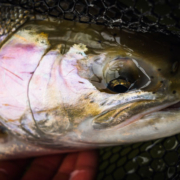
February and March are prime months for targeting steelhead on the Big Manistee River. As the temperatures start to warm up, the steelhead become more active and begin their journey upstream to spawn. This is when anglers have the best chance of hooking into these chrome beauties.

When fly-fishing for steelhead on the Big Manistee River, it’s important to have the right gear and tactics. A 9-10 foot fly rod in the 7-8 weight range is ideal for handling these strong fish. A variety of fly patterns can be effective, including egg patterns, nymphs, and streamers. It’s also important to have a selection of sinking tips to get your flies down to where the fish are holding.

Swinging Flies

One of the key techniques for success when fly-fishing for steelhead on the Big Manistee River is to swing your flies through likely holding spots. Look for deep pools, runs, and riffles where steelhead are likely to be holding. Cast your fly upstream and let it swing through the current, keeping a close eye on your line for any subtle takes.

Another effective technique is to nymph fish with an indicator. This involves using a weighted fly or nymph and suspending it below a strike indicator. This allows you to fish your fly at various depths and cover more water effectively.

The Big Manistee River below Tippy Dam can see a fair amount of angling pressure during the spring steelhead run, so it’s important to be respectful of other anglers and practice good river etiquette. Be sure to give other anglers plenty of space and avoid crowding in on their fishing spots.

Overall, spring steelhead fishing on the Big Manistee River below Tippy Dam is an exciting and rewarding experience for fly-fishing enthusiasts. With the right gear, tactics, and a bit of patience, anglers have the opportunity to hook into some truly impressive steelhead during the months of February and March. So grab your fly rod and hit the water for an unforgettable steelhead fishing adventure on the Big Manistee River.

Manistee River Steelhead Report below Tippy Dam

Manistee River

Manistee River Steelhead Report

Steelhead fishing Below Tippy Dam

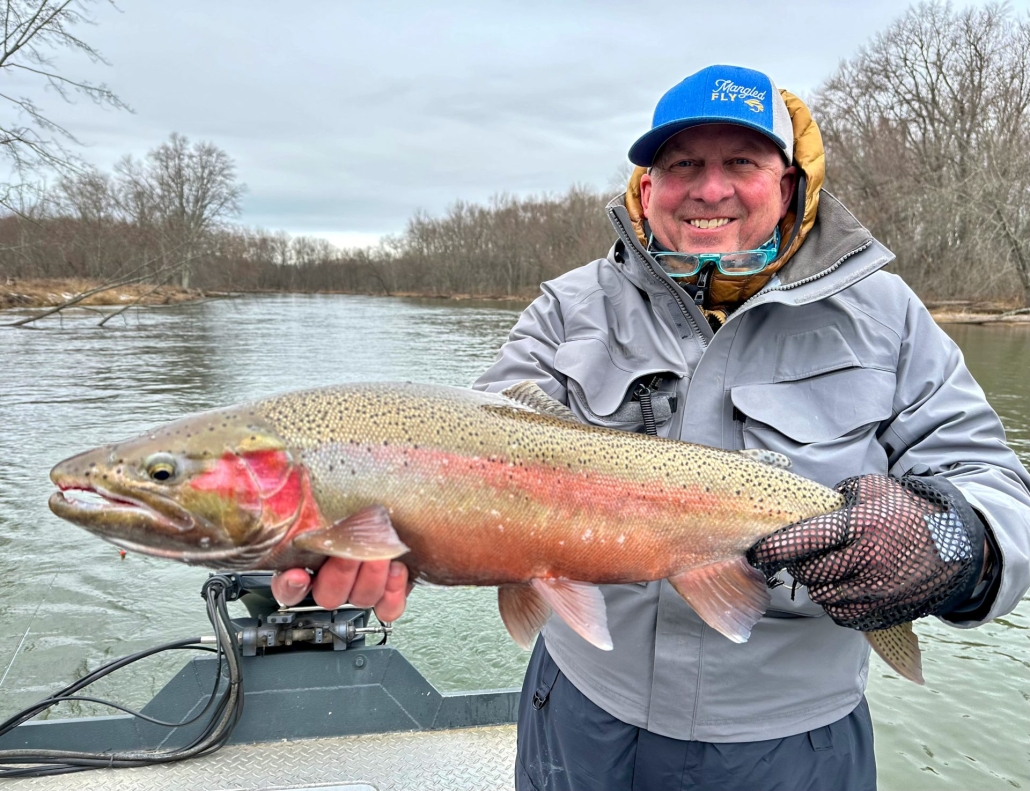
The Winter Steelhead Fishing Report for Below Tippy Dam.  The Fall season was great even with low water levels we had good numbers of fish around this year, the winter session has not disappointed especially now that the Manistee River below Tippy has settled into a more constant temperature.  December we had some tough conditions and had to cancel too many trips, but since we have been getting out in January fishing honestly has been really good. 

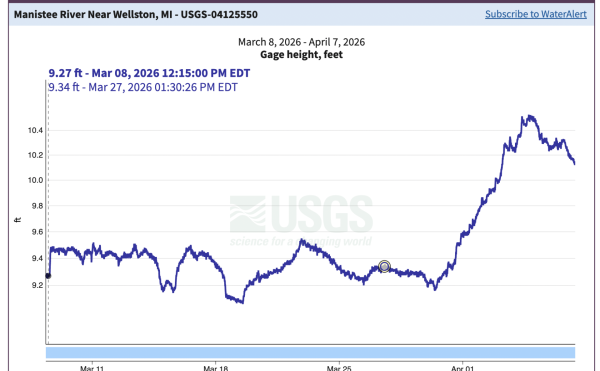
Today’s flow at Tippy Dam  are 2400 cfs and 36.0 F. The local area had a good mix of rain and snow this weekend. The has bumped up to the biggest number of the season so far.  I love it that we got this water right now, should set us up nicely for the next month.  With a bump in flows should shuffle the deck as we had some lower flows that we want for winter fishing.  

Winter Steelhead Fly Patterns

Manistee River Steelhead Report

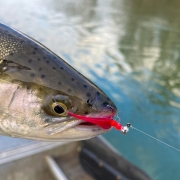
Winter Steelhead fly patterns change slightly from  the good old egg fly or beads that we run day in and day out in the fall season.  Instead of matching the hatch, its no more about grabbing the attention.  As was the case this past week size 12mm beads in pink fished the best for us.  This was before the bump in water. We need to grab the attention of the steelhead and make them curious.  Try brighter hues and larger sizes during the wanter time are commonly the best choice.

Get Jiggy

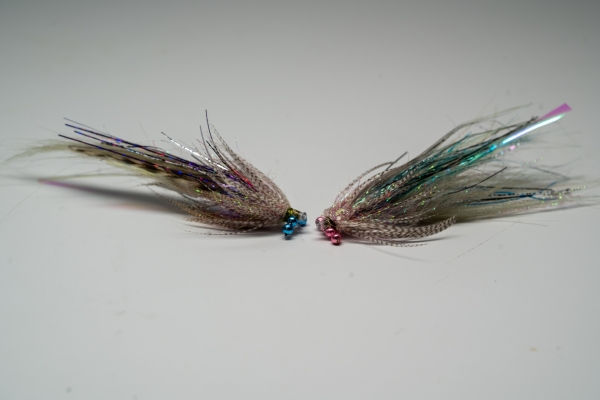
Swinging flies still works but slows down in the winter, as cold water temps makes it the hardest time of year to get these fish to move.  But instead of swinging the fly, we start of thinking of jigging it.  Same type of patterns we swing in the fall we now start to downsize and try to fish them with a jiggy action.  Black, Olive, White and even pink marabou patterns fished with heavier heads to get them down fast and keep them in the zone. Been playing around with a bunch of balanced leeches, a balanced pink worm, and soon I’ll be throwing a balanced baitfish pattern for those alevins that should be hatching from the gravel.

We start fishing more of a floating line selection now, giving us better line control on the mend.  Look for the slowest part of the pool / run and get your flies as deep as possible.  

Booking a Trip

The Manistee River blow Tippy Dam is one of the best west side rivers in the state of Michigan.  We specialize in Steelhead and Trout fishing on this section of the Manistee River Watershed. Mangled Fly guides are available during the winter fishing for a Full or Half Day Trip. Now is a great time to book your Spring Fishing adventure as well, with Steelhead, Trout, and Pre-Spawn Smallmouth on the agenda.

If catching a Great Lakes Steelhead in on your wish list give us a call to join in the fun at (231-631-5701), you can also shoot us an email.  We are currently booking Winter and Spring Steelhead Trips.  

Jon Ray

Upper Manistee River Trout Fishing
 

Manistee River Trout Report

Upper Manistee River trout fishing report

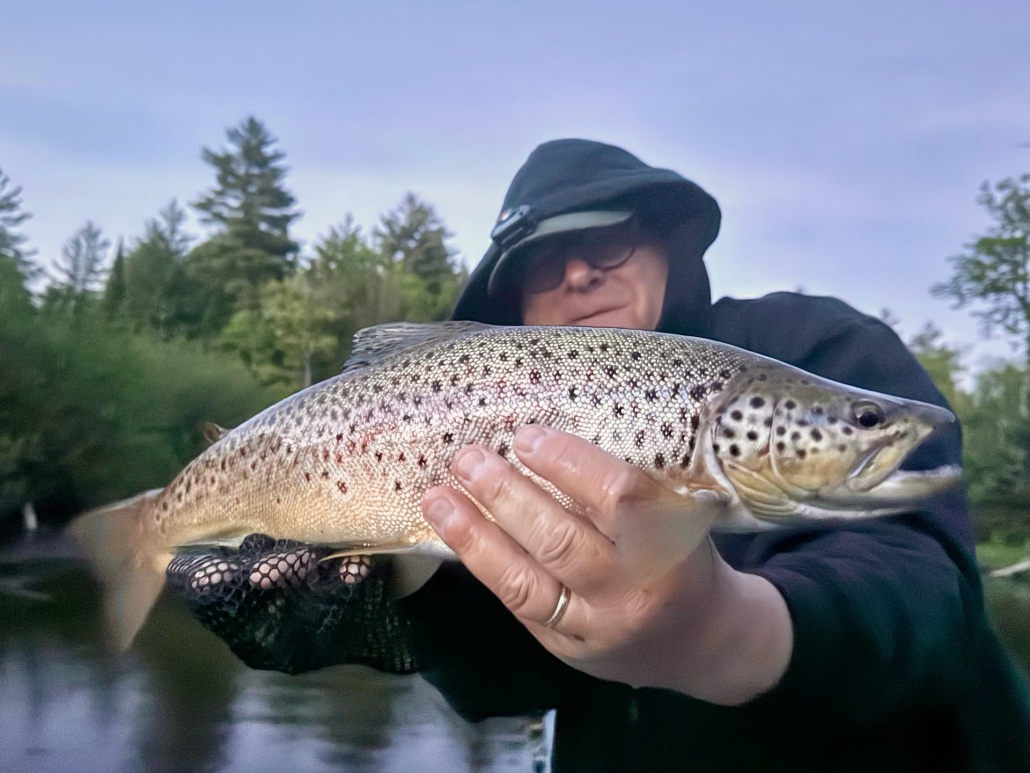
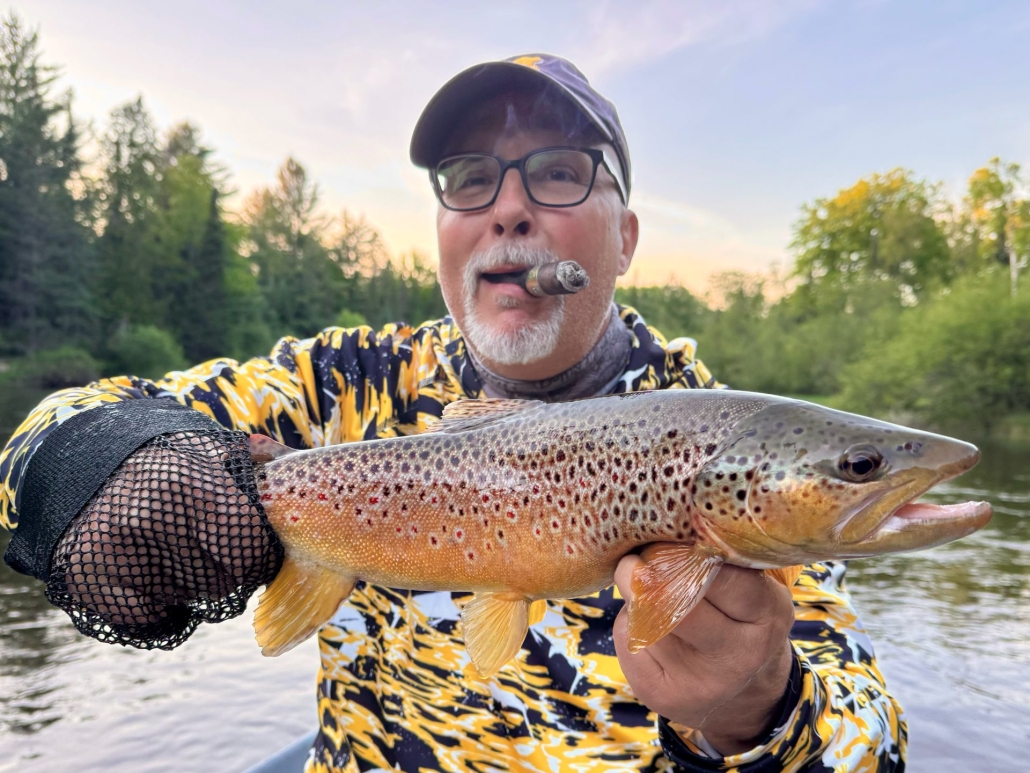
The Upper Manistee River Trout Fishing report for mid-October has us transitioning into the fall spawn. Fall is in the air, you could feel it this past week during the cool down. As we enter late October, we will see most of our Brown and Brook Trout enter the spawning period.  Streamer fishing this past week was pretty productive for us as most of the fish appear to be prespawn and still actively feeding. Despite the low water and bright sunny conditions we had decent activity as water temps dropped into the low 50s.

Read more

Northern Michigan Smallmouth Bass

Northern Michigan Smallmouth Bass

Northern Michigan Smallmouth Bass

Capt Owen of Clear Water Angling

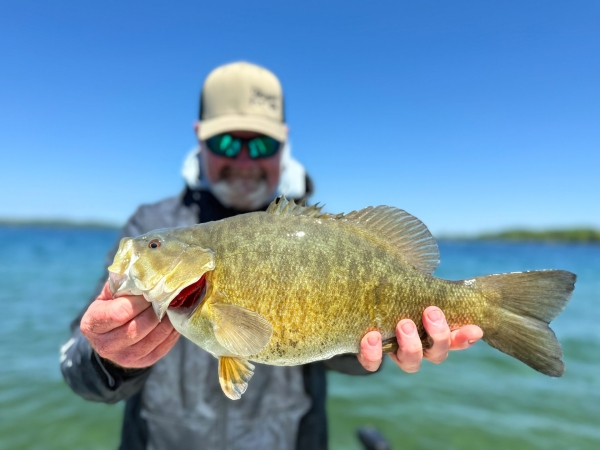
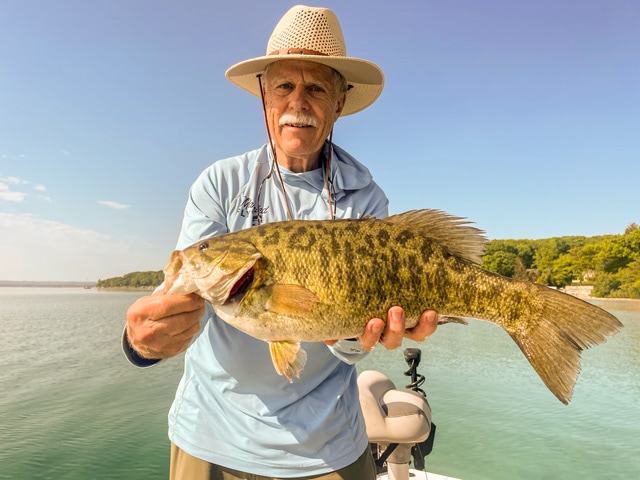
Smallmouth bass fishing season in Northern Michigan for Mangled Fly guides is in its last few weeks, as we transition towards the Big Manistee and Fall Steelhead  But by no means does this indicate that the fishing is slowing down, I highly recommend reaching out to Owen at Clear Water Angling if you have the smallmouth itch this fall.  As fall is a prime time to hunt some of the biggest fish of the season, as they put on the feed bag before winter.

Baitfish

One of the key indicators of the fall transition is when you find big Baitfish concentrations.  Baitfish are grouping up in huge baitfish balls, and predator fish take advantage.  Yesterday on Grand Traverse Bay when we found the bait we found not all smallmouth, but Cisco and even a King Salmon feeding on the baitfish.

Northern Michigan Smallmouth BassWhile Grand Travese bay is still in the upper 60’s for tempature as of mid September, which has kept most of the Smallmouth out deep, it is only a matter of time before Baitfish and Smallmouth go shallow.

When they go shallow throwing A-rigs, or jig and a minnow type outfitters will serve you real well, currently with them hanging on the deeper edges drop shot is the name of the game.

Fishing Drop Shot

Fishing with a drop shot rig for smallmouth bass during the summer months has beeen highly effective for a number of reasons. Smallmouth bass tend to be more active and aggressive during the warmer months, making them more likely to strike at a bait presented in a drop shot rig. The drop shot rig allows for precise presentation of the bait at different depths, which is crucial when targeting smallmouth bass in the late summer as they may be holding at varying depths depending on water temperature and oxygen levels.

Additionally, the drop shot rig is a finesse technique that allows for a subtle and natural presentation of the bait, which can be particularly enticing to wary smallmouth bass in clear water conditions. This can be especially beneficial during the summer when bass may be more selective in their feeding habits. Overall, fishing with a drop shot rig for smallmouth bass during the summer months can increase your chances of success and help you catch more fish.

Some of my favorite late summer finesse baits to fish on a drop shot are Baby Z Too (Arkansa Shiner)  KVD Dream Shot (KVD Magic) , and Roboworm 4.5″ (Aarons Magic)

Booking a Smallmouth Trip

Interested in booking a Smallmouth Bass Trip or going for Lake Trout on light tackle, drop us a message via email, or text/call us directly 231-631-5701.

Jon Ray

Mousing for Trout with Ed McCoy

Mousing for Trout

In this video, the Northern Angler crew interview Ed McCoy and take a deep dive into mousing for big trout. For years, Ed has dedicated his summer months Night Fishing down the Manistee River in the dark finding fish to chase mouse and frog patterns. He shares what he has learned so you can try it for yourself.

Pere Marquette Fishing Report

Pere Marquette Fishing Report

Pere Marquette Trout Fishing


Hello fishing friends! I hope this spring season finds everyone healthy and finding fish! The spring season is in full swing. It has been great watching nature waking up after a long cold winter.

Steelhead Fishing

Steelhead fishing has been good. Our best fishing has been in the dark water down river of shallow water. The pre-spawn fish have been staging in the deeper runs close to the spawning gravel. There has been a good number of steelhead spawning. It is nice to see them making more for our future fishing. As the spawn continues the dropPere Marquette Trout Fishing back steelhead fishing should start to gain momentum. Fishing beads under floats has produced some good action. The stone flies are starting to hatch and the salmon fry are starting to show up in the slow water and eddies.

Minnow Patterns

With this starting look for the steelheads to start keying in on stonefly nymphs and minnow patterns. When this time of the year happens it is time to put the float rods away and get the streamer and lure rods out. Great fun watching the chase down your bait and punish it! With the water warming the brown trout fishing has been getting better everyday. At this point the best trout fishing has been behind the areas that steelhead are or have been spawning. But that being said this will be changing shortly. With the insects starting to wake up and the steelhead spawn slowing, the brown trout should start to transition into more of a classic holding water. Back into the log jams and bubble lines. This is a great time to catch a good brown on a dry fly, streamer or lure.

The river has dropped and is looking real good. Wading should be doable this week. Spring has sprung! Get out there and enjoy some therapy time in nature. We still have a couple open dates in April if you would like to float. May is the time to start chasing smallmouth bass and that is something to look forward to. If you haven’t fished bass with us yet you should! They pull hard! Be safe out there!

Captain Jeff


2024 Fall Fishing Review Video

New YouTube Video

Have you checked out the new YouTube Video?  Ed, Jeff, and I sat down with Brian Pitser from the Northern Angler to discuss our thoughts about the 2024 Fall Fishing.  This is a new format that we tried and I’m open to any thoughts you have or comments.  So please drop us an email positive or negative on what your thoughts are.

With still a few weeks left before the Spring Steelhead season, we would like to kick out some more content before the season ramps up again.  Thank you for watching.

Jon Ray


Fishing the Moon Phases

Can Moon Phases Influence your Angling Opportunity?

Fishing the Moon Phase

Understand how to fish the Full Moon

Moon Phases are known to influence both fish and wildlife populations.  The major effects experienced during the new and full moon phases primarily occur through changes to ambient light and gravitational forces.  A full moon will produce more ambient light and stronger gravitational forces creating stronger tides.  These influences can alter the behavior and feeding patterns of fish and wildlife.  Furthermore, the moon phases are believed to impact the reproductive cycles in some species.

Certain animals time their breeding seasons around the lunar cycle.  This is a possible strategy to ensure their offspring are born under favorable conditions.  One advantage for open water fish species is the tidal dispersion of eggs.  This is more favorable during a full or new moon phase due to tidal influences.  Another Hypothesis is that fish experience brighter conditions during a full moon allowing greater nocturnal activity.  For example, bass tend to lay their eggs during a full moon, as do bluegill.  It’s theorized the increased lighting aids in nest building, mate recognition, locating suitable spawning sites, and protecting their eggs from nest invaders.

While the lunar influences are interesting to consider, it’s also important to note that there are other environmental stimuli.  For Example, spawning activity is often closely associated with water temperature and photoperiod.  The new and full moon phases may in fact act as a secondary trigger significantly altering the amount of ambient light available.  Many nocturnal animals, such as owls and bats, benefit from the increased lighting during a full moon.  The increased light at night aids in hunting and navigation.

Heightened Feeding Activity

Fish tend to come to the surface during the full moon.  This is mainly because the brighter lunar lights attract them.  Some prey species will follow phytoplankton towards the water’s surface.  This behaviour typically peaks during a full moon making prey species more vulnerable to predators.  It’s theorized that the full moon’s increased light levels at night can stimulate feeding activity in predatory fish.

Muskie for example, is a species relying heavily on its eyesight to hunt.  The additional light gives them an advantageFishing the Moon Phase in low-light conditions. Muskies, often called “the fish of 10,000 casts,” are apex predators that prefer to ambush prey. The full moon enhances their ability to feed at night and can make them more active and aggressive around the full moon.  This heightened activity should increase the encounter rates of Muskies for anglers fishing around the full moon.

Conversely, prey species might also adjust their behavior to avoid predators.  During the new moon some predators may struggle to hunt while prey species might take advantage of the reduced visibility to move around more freely.  Brown Trout, known for their nocturnal habits, tend to become more active at night around the new moon.  During the full moon, the brighter ambient light seems to have the opposite effect.  The larger Brown Trout may experience more vulnerability under the brighter full moon while patrolling shallow waters for food.

Alignment of Lunar and Solar Influences

Fishing during the major moon phases has long been a topic of debate among anglers.  Some chalk it up to folklore, but many experienced anglers agree that moon phases impact fish behavior.  Peak feeding activity times for fish such as Muskie and Brown Trout can align with lunar events.  Anglers can use this information to plan fishing efforts in advance.  The alignment of the sun and moon during the full and new moon can create “major” and “minor” feeding periods.  These periods indicate peak fish activity and are considered peak fishing windows for anglers to target.

During a full moon, lunar and solar gravitational forces align to create strong tidal effects in marine environments.  Even larger freshwater systems like the Great Lakes can experience subtle water level changes.  While these effects may not create visible tides in freshwater ecosystems, they subtly influence fish behavior, including feeding and movement patterns.  Water clarity is also a strong influence on fish behavior as it relates to ambient lunar light penetrating into clear waters.

Steelhead are a freshwater species that tend to show a strong movement pattern around the full moon.  We will often see increased Steelhead movement associated with a full moon phase.  As the full moon approaches Steelhead accelerate their upstream movements every fall and spring.  Many anglers have also observed that species like Muskies and Brown Trout are often active around moonrise, moonset, and other peak lunar periods during a new or full moon.

Solunar Calendars

Solunar fishing calendars are a popular tool used by anglers to target specific times of increased fish activity.  These charts are characterized by two “major” and two “minor” periods during a 24 hour day.  The major’s are during the moon overhead or moon underfoot times.  The minor’s are typically focused around moonrise or moonset.  These same conditions can be found during both the new and full moon phases.

More emphasis has been put on the full moon phase as the ambient light at night is greater and therefore is considered to have an extended influence on fish behavior.  The best fishing days and times are typically found around the new and full moon events each month. The best fishing times on those days are typically detailed as “major” and “minor” times.  Typically I find the better days of fishing are associated with either 2 “major” events and 1 “minor” period or 2 “minor” events and 1 “major” period during my outings.

I have used Solunar calendars with some success targeting both Muskies and Brown Trout during my fishing trips.  Personally I feel there is a greater correlation with using Solunar times as a predictor of fish feeding behavior for pursuing Muskie.  I have found the moon rise and set times during a full moon to coincide better with increased Muskie activity while fishing.  Brown Trout on the other hand tend to break the rules and more often than not I find that predictable Brown Trout activity is situational at best.

Conditions Still Matter

In summary, the moon’s phases have a multifaceted impact on fish and wildlife populations from influencing their behavior, feeding habits, reproduction, and to their overall survival strategies. While the major moon phases can offer excellent opportunities, success also depends on other factors, such as water temperature, weather conditions, and local fish habits. Conditions still matter and you must still consider the local weather and water conditions.  By themselves, Solunar times are simply a best guess recommendation.  For optimal results, pairing new and full moon insights with local knowledge and conditions is the key to expanding your success.

Cold Weather Fishing Gear

Cold Weather Fishing Gear
Cold Weather Fishing – New Updates Dec, 2024

Fall and Winter Steelhead Gear

One of the more difficult challenges we face in the Midwest during Steelhead season is staying warm. This leads to many questions when preparing for your fishing trip. What do I wear? What cold weather fishing gear do you bring on your trip? With over 30 years of fall/winter steelhead fishing under my belt, I thought I would share how I layer myself before each steelhead trip.

I live by the philosophy that if I get hot I can always take it off. I’ll also share a few bonus tips, tricks, and some new technology along the way. We found some new tech last year that we used with great success and I’ll share that as well.

Base Layer

Once I determine wether the day is going to be wet or dry and what the overall forecast is, I can make my base layer choices. I have two layering systems that I can choose from based on what the weather forecast might be for the day. If I believe it’s going to be wet I prefer my base layer to be a Merino Wool based material. Having tried almost every other type of layering fabric, wool is my go to choice for wet days. No matter how cold and wet I get, wool based materials still keep me warm. The majority of my favorite wool base layers I purchase have been from Patagonia and now Duckworth. Duckworth is a new company for me, but to say I’ve been impressed is an under statement . Make sure to check out the Mens Powder Hoody, you will not be disappointed.

One more quick tip here, no matter if it’s a wet or dry forecast, I will NEVER wear cotton based materials! Even on the unseasonable warm days I still go with a synthetic base layer on dry days. Synthetics are always my go to base layer, wether the forecast is wet or dry. I always start with some sort of wicking layer for my base. Some of my favorite wicking layers range from our hoodie less sun-shirts to any of the Simms fabrics.

To complete the base layer system I choose for the day, I may double up on my base layers depending upon the low and high temperatures for the day. It’s not uncommon for me to start with lightweight layers and then add a mid or expedition weight base layer before adding one of my favorite layers of all, the Puffy Jacket.

Read more